


"Write Every Day, Keep Writing, Write Until the Very End"
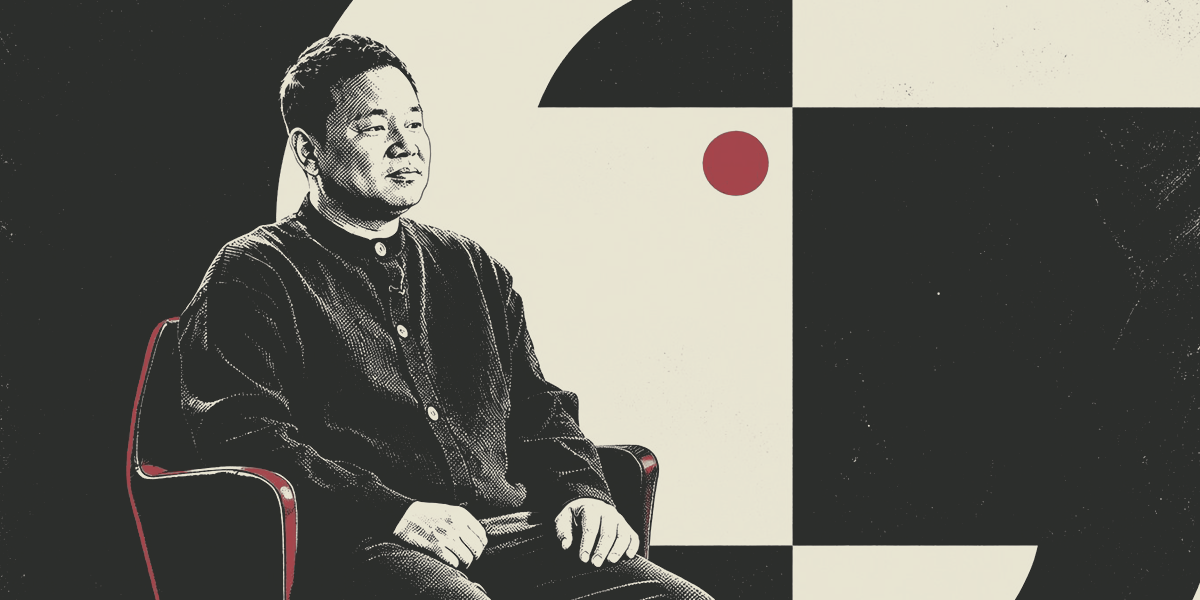
South Korean writer Kim Ho-yeon, author of the international bestseller The Uncanny Convenience Store, has visited Moscow for the first time. In an interview with Sergey Demensky, CEO of the Eurasian Media Group, he spoke about why writing novels brings him greater inner peace than writing screenplays, looked back on seven long years of obscurity, and offered advice to aspiring writers who are still searching for their own path.
– Kim, this is your first visit to Russia. What brings you here, and what do you expect from meeting Russian readers?
– Moscow is a city I have always wanted to visit, and now, at last, I am here. To be honest, I still cannot quite believe it. Finding myself here feels so extraordinary. The reason for my visit is very simple: I want to meet the readers who love my novel. It really matters to me to find out what they think of my work.
Before I became a writer, I worked as a screenwriter, and I know quite a few people in the film industry, many of whom studied acting in Russia. So I had formed a certain impression of your country a long time ago, and I had always wanted to get to know it better. But reality has exceeded my expectations. The first thing that struck me was the sheer scale of everything here: the vast city, the wide streets, the imposing buildings. It is an entirely new and wonderful experience for me. And, of course, the people have pleasantly surprised me, too. I used to think Russians were rather reserved and closed-off, but in reality, people have turned out to be incredibly kind and welcoming. While I am here, I have this constant feeling that someone invisible is looking after me.
– Today, you are an internationally renowned author. How unexpected was this success for you? Could you ever have imagined that your book would become a bestseller not only in South Korea, but also in Russia and many other countries?
– I never expected it. It was completely new territory for me. You see, I wrote The Uncanny Convenience Store without having a publishing contract in place. I had already published four novels, but none of them had brought me any recognition. No publisher wanted to sign a contract with me for a new novel. So I struggled to find a publisher who was willing to bring this book out after I had finished writing it. After so many years of being unknown, I certainly never expected it to become such a success.
– Has your life changed since your success? Do you feel that you now have a greater responsibility?
– My life has hardly changed at all. I still write, and I am still a novelist. Of course, I now have more fans, readers, and friends. And I do indeed feel a greater sense of responsibility. This book came along at a very difficult time and became something that helped some people carry on with their lives. I owe it to them not to let them down and to live up to the expectations of those who have come to love The Uncanny Convenience Store. I made that promise to myself, and I do my best to keep it.
– The convenience store in your novel is a kind of healing space for its characters. Is it entirely fictional, or was it inspired by real places? And, if you don't mind me asking, what place do you consider your own main source of strength and inspiration?
– There is no such store in real life. It is a composite image. I have many friends who run similar little shops, and they were my inspiration. As for my own special place, my source of strength... Have you been to Seoul? There are a great many mountains and rivers there, and they have become that place for me. Nature helps me a lot. Simply observing it really calms me down. And, of course, there are conversations: with my wife, with friends, even with strangers. I love having people over, so I suppose I would make a pretty good shopkeeper at that very store. I would be delighted to help everyone find what they need and serve each customer.
– You spent seven years essentially writing without publishing prospects, having no contracts or guarantees. What kept you from giving up during those years?
– It is true that for a very long time, a full seven years, I was a writer nobody knew. I simply kept writing. But at some point, I thought to myself: even if I never have a spectacular, high-profile debut, I will keep writing. Because I am a writer. I simply decided that recognition was not a necessity. The important thing was that if I wrote novels, then I was a novelist. I just needed to keep doing my work, and perhaps, one day, people would understand me. But even if that never happened, that would be fine, too. I would simply carry on writing.
– In South Korea and around the world, people often lose themselves and burn out trying to live up to rigid standards of success. When you were writing this book, did you consciously set out to create a work of healing fiction, or did you simply write a story without thinking about its genre?
– When I was writing, I did not think, “Now I am going to write a healing novel.” I did not try to fit the text into any particular genre. I simply created a story. It was only after the book was published that publishers and critics began describing it as healing fiction. As for your question... I believe that simply existing, living a life, is already a victory. You do not have to achieve great heights. Existence is per se a victory for the individual, a victory for humanity.
– If the person you are today, an internationally renowned author, could go back to 2010 and walk into a Korean 24-hour convenience store, where a tired, unknown screenwriter named Kim Ho-yeon is sitting at a table, what would you buy him, and what one thing would you whisper in his ear?
– I would buy him a drink, because I enjoy one myself. And I would tell him just this: “Don't overthink it.” You do not need to brood over any thought for too long. You can live a simpler and peaceful life; no need to fixate on anything too much. You can just let yourself live.
– You worked on screenplays, where the usual requirement is a striking, spectacular visual style that commands the audience's attention straight away. Your prose, by contrast, is very quiet, gentle, and unhurried. How did these two very different approaches to storytelling coexist within you, and why did you ultimately choose to focus on books?
– I was not a successful screenwriter. I did not enjoy writing those energetic, hard-hitting pieces. I never found my place in movie industry because I am not drawn to those bright flashes of spectacle, to the deliberately dramatic visuals that the screen demands. And, to be honest, I feel sorry that things are this way, because Korean cinema once used to be very quiet, serene, and unhurried, too, and it was known all over the world. I know that old Korean films are highly regarded in Russia as well. Unfortunately, times have changed. Today, making films requires huge investments, and everything has to be as visually striking, intense, and emotionally stimulating as possible. That is not what appeals to me, which is why I turned to literature. I write the kind of stories I love: soothing, peaceful ones. But when it comes to storytelling, the structure of a feature-film screenplay and that of a full-length novel are not all that different. In terms of page count, they are roughly comparable in length. So the transition from screenwriting to writing novels came quite naturally to me.
– Both during your screenwriting career and after your novels were published, you faced some pretty harsh criticism. How do you deal with it?
– Yes, critics certainly did not go easy on me when I was a screenwriter. Above all, I received a lot of criticism from directors and producers. But I think they simply failed to recognize my potential, which is why they were so harsh. As a novelist, I have also received some unflattering reviews, both from critics and from certain readers. Even so, I make a point of reading all the feedback because it matters to me. Things got to the point where people would say, “A writer like you will put this publishing house out of business.” The criticism was really severe. Now I understand that the best thing to do with attacks like that is simply to let them roll off my back and ignore them completely. Fortunately, though, the negative reviews were far outnumbered by the positive ones. And I trust the readers who left them.
– What is the most moving piece of feedback you have ever received? The one that really stayed with you?
– The most touching moment happened during a book-signing event in a small town. Someone brought a copy of The Uncanny Convenience Store and asked me to sign it, not for themselves, but for a friend of theirs. They told me that their friend was going through an extremely difficult time and was suffering from deep depression. They practically begged me to sign the book and write a few comforting words for her. Afterwards, that person thanked me profusely for what I had written, saying that both the book and my message of encouragement would surely help their friend. I can still remember that scene very vividly. It is one of my strongest memories of meeting readers.
– Kim, how do readers in different countries differ from one another? And what do you think they have in common?
– I have actually met audiences in around 20 cities across different countries by now, and I have realized that people everywhere say pretty much the same things. My readers tell me that this book has helped heal their wounds, brought them comfort, and helped them grow closer to their families. In other words, no matter which country someone comes from, the words are much the same. So, to me, readers are more or less alike. There are still some differences, of course. In Asian countries, such as Japan and Taiwan, people tend to take me very seriously. And since the Korean Wave, or Hallyu, is so popular there, many people know a little Korean and try to say at least a few words to me in my language. Brazil, for example, has a completely different atmosphere. People would dance their way up to me and take pictures with me. It felt like a real celebration, a festival. My event in Spain had its own distinctive mood, too. It almost felt like a sporting event. Everywhere has its own unique character. And soon I will find out what it is like in Russia. A bookshop event is coming up, so it remains to be seen how Russian readers differ from others.
– You have achieved worldwide recognition. Many young writers would love to follow in your footsteps. What advice would you give those who do not yet have a publisher or any experience, but really want to write?
– I can tell you three things. First, never give up, no matter what. Second, if you love writing, it will be hard. You will not lead a wealthy life; you may well be poor. But it is a wonderful thing, an extraordinary life. If you are lucky, you will earn your readers' recognition. Perhaps you will not be lucky, and you will not receive that recognition. But if you love writing, keep going. And third, this is actually the title of one of my essays: Write Every Day, Keep Writing, Write Until the Very End. That is what being a writer is all about. Write every day, never stop writing, and write to the end.
Interview by Sergey Demensky
Image credit: "Za rubejom", Leonardo.ai
20.10.2026
news
What has brought Europeans onto the streets, and what concessions might governments make?
23.10.2026 09:00:00
Bolivian authorities want to put former leader Evo Morales behind bars. The ex-president is threatening them with civil war.
22.10.2026 09:00:00

Other Interviews
Interview with a member of the BRICS Literary Prize jury from the UAE, Dr. Maryam Alhashmi.
Interview with the President of the Ethiopian Writers' Association <b>Abere Adamu</b>.
Interview with a nominee for the BRICS Literary Prize, Egyptian writer Salva Bakr.