


“Partnership between States Ultimately Rests on the Character of Their Peoples”
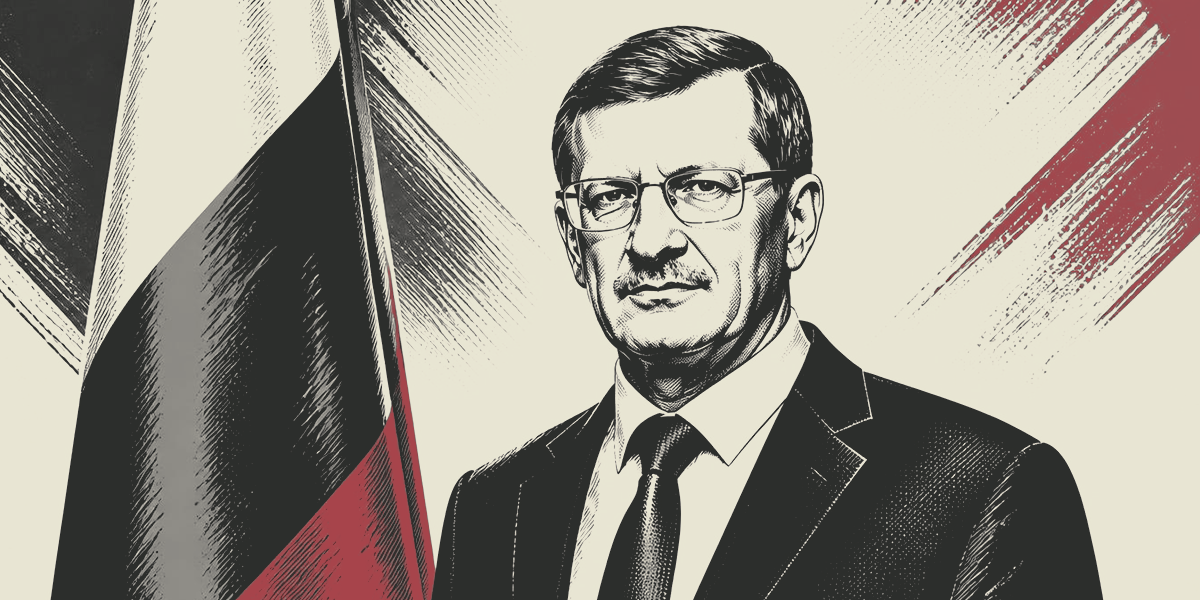
Relations between Russia and the Democratic People's Republic of Korea have evolved from “traditional friendship” into a “comprehensive strategic partnership.” The two countries have signed an indefinite treaty, opened the first road bridge across the Tumen River, resumed direct air services, and taken cultural and educational exchanges to a new level. In an exclusive interview with Za Rubejom, Andrey Leonidovich Podyolyshev, Ambassador Extraordinary and Plenipotentiary of the Russian Federation to the DPRK, spoke about what lies behind the change in terminology, how practical cooperation works under sanctions, and how the current situation on the Korean Peninsula differs from that of thirty years ago.
— Mr. Podyolyshev, you first arrived in the DPRK in 1984 as a young diplomat. More than 40 years later, you have returned as Ambassador, at a time when relations between the two countries have reached, in your own words, a “very high level.” In the past, they were described as “traditional friendship”; now the term is “comprehensive strategic partnership.” What lies behind this change in terminology? Is it simply a legal formalization of something that already existed, or does it mark a qualitatively new stage?
— The foundations of relations between Russia and the DPRK were laid back in 1945, when Red Army soldiers, fighting shoulder to shoulder with Korean patriots, liberated the Korean Peninsula from Japanese colonial rule. As early as 1948, the Soviet Union became the first country in the world to recognize the Democratic People’s Republic of Korea and establish diplomatic relations with it. During the Korean War, which is known here as the Fatherland Liberation War, our country provided effective fraternal assistance to the young republic. In the post-war period, we offered comprehensive support for its reconstruction and industrialization.
The Treaty of Friendship, Cooperation and Mutual Assistance, signed in Moscow on July 6, 1961, formalized the allied nature of our relations. It remained the political and legal foundation of bilateral ties for four decades. In the 1980s, during a notable upswing in Soviet-Korean relations, it was consistently reinforced by agreements in trade, economic, scientific and technical cooperation.
Today, our relations have entered a qualitatively new stage. The Treaty on Comprehensive Strategic Partnership, signed in Pyongyang on June 19, 2024, is not merely a change in familiar terminology; it is a document that reflects a new level of cooperation. Its indefinite term lends stability and predictability to ties between Moscow and Pyongyang—qualities that are particularly valuable in a world changing rapidly before our eyes. The treaty's agenda covers virtually every area of strategic importance: from information and communication technologies and artificial intelligence to energy and food security; from the peaceful use of nuclear energy to joint efforts to counter unilateral coercive measures. The breadth of this agenda speaks for itself: our countries see each other as long-term partners.
One important point is that detailed cooperation through interagency agreements was common practice in the 1970s and 1980s, and it remains so today. We have not become less active in signing such agreements. What has changed is the foundation itself. The new Treaty incorporates everything valuable accumulated over eight decades and has elevated our relations to an entirely different level. This is what the journey from traditional friendship to comprehensive strategic partnership looks like—a journey the two sides have made together over these years, one that now serves the well-being of Russia and Korea, strengthens mutual trust and contributes to the prosperity of our peoples.
— You have mentioned that your task is to bring practical cooperation to a higher level. Which areas currently require the most attention—economics, culture, education or sports? And where do you see potential that has yet to be fully realized?
— Today, our joint work with our Korean colleagues in practical areas extends to virtually every field of cooperation. As for the economy, bilateral trade in 2025 has so far remained below USD 100 million. However, I believe this figure will grow, partly as a result of expanding the range of goods traded and increasing the volume of interregional trade. Another meeting of the Intergovernmental Commission on Trade, Economic, Scientific and Technical Cooperation is scheduled to take place before the end of the year. It will address ways to further expand bilateral cooperation.
As for cultural ties, a Russian Film Week was recently held in Pyongyang, attracting genuine interest from the capital's audiences. In October, a showcase of Korean films was successfully held in Moscow. Russian artistic groups perform in the DPRK to packed audiences. Our performers also traditionally represent Russia at the April Spring Friendship Art Festival, which is held here on a regular basis.
In terms of educational exchanges, it is worth noting that 100 DPRK citizens were admitted to Russian universities under the Russian Government's scholarship quota for the 2025–2026 academic year. For the current academic year, the quota has been increased to 170 students. In September, Pyongyang hosted the Second Forum of Russian and Korean University Rectors. The Center for Open Education in the Russian Language and Russian Language Teaching also opened at the Second Pyongyang Teachers Training College, with methodological support provided by Blagoveshchensk State Pedagogical University.
As part of our sports exchange programs, joint training camps, tournaments and friendly competitions in freestyle wrestling, table tennis, volleyball and taekwondo are held regularly. Delegations from government agencies of our two countries are exchanged at various levels virtually nonstop. You can see this for yourself by following the embassy's social media accounts. Last week, the Russian women's junior national ice hockey team arrived in Pyongyang, while our wrestlers are currently taking part in a joint training camp with DPRK athletes.
— When discussing international relations, we often focus on interests, negotiations and strategic calculations. Yet long-term partnerships always rest on something deeper: the values and norms that shape a nation's character. What principles are considered essential to a person of integrity in Korean society, and how does this underlying system of values shape the DPRK's partnership with Russia?
— The values of duty, loyalty to one's commitments and collective solidarity in the face of hardship are deeply rooted in the DPRK. Reliability here is understood as the ability to stay the course regardless of external pressure, while personal maturity means being prepared to take responsibility for one's decisions and not backing down in the face of adversity. Collective interests have traditionally taken precedence over individual ones and serve as a natural foundation for moving forward. This ethic of responsibility shapes everyday standards of conduct and is reflected in the character of the Korean people: restraint, resilience, readiness to help others and willingness to share a common burden.
The same principles shape the way our countries interact at the state level. Statements by the Korean leadership concerning relations with Russia regularly feature such expressions as “fraternal relations,” “blood alliance” and “allied duty.” These are not merely decorative words. They reflect a principled position: Russian-Korean ties are not built on considerations of political expediency, but on mutual responsibility and shared approaches to the key challenges on the international agenda. Recent events have borne this out. When neo-Nazi formations of the Kyiv regime invaded the Kursk Region, the DPRK provided assistance in repelling the aggression, fully in accordance with Article 4 of the Treaty on Comprehensive Strategic Partnership. The Korean People's Army fought with distinction on Kursk soil: its soldiers and officers displayed extraordinary heroism and self-sacrifice. Honor and glory to the Korean warriors— their feat will remain forever in the memory of the Russian people.
The same principle—that an alliance is a matter of duty, not a transaction—underpins other areas of cooperation as well. It is reflected in the consistent coordination of our positions at international venues and in the restoration and strengthening of ties in strategically important fields, where a sustainable partnership matters more than short-term gain.
As a result, relations between Russia and the DPRK are not a series of isolated initiatives, but a carefully considered long-term policy. What matters is not a high-profile gesture, but keeping one's word and being prepared to take the long view. Devotion to duty, restraint in words and generosity in deeds, and commitment to principles regardless of external circumstances—these qualities, nurtured by the very fabric of Korean society, have become the solid foundation of our relations. Partnership between states ultimately rests on the character of their peoples, and in this respect our friendship has the strongest foundation possible.
— In September 2026, Russia and the DPRK launched a road bridge across the Tumen River. Some experts suggest that it could become the first step toward establishing a through-transit corridor for North Korean cargo traveling across Russian territory to Central Asian countries. How realistic do you consider this scenario, particularly given the competition from traditional maritime routes? Can we say that the new bridge, together with the Hasan–Rajin railway crossing and the port of Rajin, is creating a new configuration of transport routes in Northeast Asia?
— Indeed, the road border crossing opened this autumn is another transport link connecting our countries. Its operation will make it possible to expand bilateral economic ties, increase freight traffic and facilitate humanitarian exchanges. The bridge will also provide a more convenient route for tourists traveling here than the Hasan–Tumangang railway crossing, where border crossings are tied to train schedules.
However, in my view, it is premature to speak of a DPRK–Russia–Central Asia transit corridor or a new configuration of transport routes in Northeast Asia. Our first priority should be to fine-tune the entire infrastructure and the processes involved in bilateral cross-border cooperation.
— Almost simultaneously with the launch of the Russian project, a bridge connecting the DPRK and China across the Amnok River (Yalu River) was opened after remaining unused for a long time. Does this suggest that Pyongyang is seeking to pursue a more balanced economic policy toward its two neighbors, Russia and China?
— The People's Republic of China is a strategic partner of the Russian Federation and our closest neighbor. Relations between Russia and China are at an unprecedentedly high level. We therefore welcomed the news that the bridge had opened: it connects the territories of two of our friends and strategic partners, the DPRK and the PRC. I am confident that this new bridge will help further expand relations between Korea and China, and we certainly welcome this development. We hope that, in the future, our citizens traveling between China and Korea will also use this bridge, which would have a positive impact on Russian tourism as well.
— Transport links between our countries are becoming increasingly diverse. How intensively is this infrastructure being used today, and how much demand is there for it? Are there plans to simplify travel arrangements for organized groups, cultural figures or youth exchanges so that the infrastructure can be used to its full potential?
— Work to develop transport and logistics infrastructure between our countries is ongoing, and considerable progress has been made over the past year and a half. In July 2025, direct air services between Moscow and Pyongyang resumed. They are operated by the Russian airline Nordwind, which became the first Russian carrier to serve this route in many years. Demand for these flights is high among both Russian and Korean passengers. Some flights, quite literally, are fully booked, and tickets are hard to come by. In addition, direct flights between Vladivostok and Pyongyang have been operating since 2023.
In June 2025, direct rail services were also restored after a five-year hiatus. A through carriage runs between the two capitals twice a month as part of the Rossiya branded train. This is the world's longest direct passenger rail route: more than 10,000 kilometers, with a journey taking approximately eight days. There is also the shorter but no less popular Khabarovsk–Pyongyang route, which is particularly convenient for residents of the Russian Far East.
In September this year, as we have already mentioned, another landmark event took place: the first road bridge between Russia and the DPRK was opened across the Tumen River. It connects the settlement of Khasan in the Primorsky Territory with Tumangang in Korea. The bridge is to operate year-round, while the modern Khasan road border checkpoint built nearby is designed to handle 300 vehicles a day.
All these measures make it possible to increase the volume of passenger and freight transportation, reduce transport costs and, consequently, boost both tourist and cargo traffic. The new infrastructure is being actively used: there is demand for it, and that demand is growing.
As for travel arrangements, they are governed by the 1997 Agreement on Mutual Travel by Citizens. In addition, DPRK citizens can now apply for a unified electronic visa to enter Russia. Applications are submitted online, without a visit to a consulate or an invitation, and the result is issued within a few days. This is a significant convenience that makes travel to our country more accessible. The effectiveness of the Agreement is reflected in the growing number of visitors: more than 5,000 Russians visited the DPRK last year. Business, cultural and youth contacts are also expanding. At the same time, we are currently considering whether the document should be updated to bring it into line with the current state of bilateral relations.
— Mr. Podyolyshev, your experience is truly unique: you worked in Pyongyang in the 1980s and later in Seoul in the 1990s, so you know the Korean Peninsula, as they say, from both sides. How different is the current situation in the region from what you observed thirty years ago?
— The 1980s and 1990s were a time when it seemed that the DPRK and the ROK were beginning to outline a path toward rapprochement. Humanitarian exchanges took place, meetings between separated families were organized, and contacts were maintained at the official level. Both sides proposed various formulas for possible reunification.
However, subsequent events took a different course. As it is seen here, the Republic of Korea used peaceful rhetoric solely to build up its military and technological capabilities, including through cooperation with the United States. It was obvious who the numerous military exercises conducted by the United States and the ROK were directed against. From Pyongyang's perspective, Article 3 of the ROK Constitution, which states that “the territory of the Republic of Korea shall consist of the Korean Peninsula and its adjacent islands,” confirms its expansionist intentions and lack of any intention to pursue de-escalation, let alone reunification.
Our Korean friends believe that, with this wording, Seoul is legally extending its territorial claims to the entire peninsula, including the territory of the DPRK. This means, in their view, that neither reunification on equal terms nor peaceful coexistence between the two states is possible today. In this context, reunification appears to the ROK not as a process of reconciling interests, but as an attempt at military absorption.
Pyongyang has therefore reached what it considers a logical conclusion: there are no grounds to expect a sincere approach from Seoul on this issue. It has designated the Republic of Korea as its “most hostile state.” As the DPRK emphasizes, the main reason is the ongoing military exercises conducted by Seoul, Washington and Tokyo against the People's Republic—whether the annual Freedom Shield maneuvers, the trilateral Freedom Edge exercises held in September this year, or the autumn Iron Mace drills.
The DPRK's preemptive strike system, known as Kill Chain; rehearsals for large-scale strikes on Pyongyang; and the integration of US nuclear weapons with South Korean forces—these are the real substance of these “maneuvers,” whose scale and frequency are growing year after year. Land, sea, air, space and cyberspace—all are being brought into increasingly realistic combat conditions. How can one regard such a neighbor?
— How do you assess Russia's role in the regional security architecture? Is Moscow primarily a stabilizing military and political partner for Pyongyang, an economic hub, or a humanitarian channel? And which multilateral cooperation formats are viable under the current circumstances?
— It is absolutely clear that the signing of the Treaty on Comprehensive Strategic Partnership between the Russian Federation and the Democratic People's Republic of Korea, which legally confirms the establishment of allied relations between our countries, sent a certain signal. The new fundamental document, and Article 4 in particular, may serve as a warning to those hostile elements that might otherwise be tempted to take dangerous and ill-considered actions against the DPRK. In this sense, the Treaty can be said to be a stabilizing factor in the regional and global security architecture.
— You have worked in many key regions of the world, but the DPRK remains a mystery to most people. What is it like to serve as Ambassador in a country that the rest of the world knows mainly through alarming news reports? Does Pyongyang's distinctive environment make traditional diplomacy more difficult, or does it offer new and unconventional opportunities for diplomatic work?
— Based on the content of your question, I can conclude that it stems from a lack of sufficiently objective information about the DPRK. Unfortunately, information about this country often comes from Western media outlets that have not the slightest idea of what is actually happening here. The People's Republic is developing by leaps and bounds. New residential districts are being built in cities, housing stock is being renovated across the country, roads are being laid, and new service facilities, restaurants, parks, recreation areas and much more are appearing. I would like to emphasize that this is happening not only in the capital but also in the provinces of the DPRK. Everyone who comes here as a tourist or on business can see these changes with their own eyes. All of this is the exact opposite of what Western commentators write about Korea.
I would also like to point out that diplomatic work in Pyongyang is no different from the work carried out at our diplomatic missions around the world. The embassy's main task is to establish contacts between government agencies and ministries in the two countries, business entities, public and sports organizations, and cultural institutions, as well as to develop plans for international cooperation. The scale of this activity today is incomparable to that of previous years. We receive and send dozens of delegations to Russia every year, while contacts with the Korean Foreign Ministry take place on a daily basis.
— What does a typical working day at the Russian Embassy in Pyongyang look like today? What are the team's key responsibilities, and what results at the end of the day make you feel that it has not been in vain?
— People who do not work in diplomacy usually see only the tip of the iceberg: its results. These include high-level meetings, the signing of agreements, and the opening of exhibitions, museums, infrastructure facilities and much more. Yet all these achievements are preceded by the diplomats' day-to-day work, which often goes unnoticed: we look for wording acceptable to both sides, coordinate dates and deadlines, agree on the composition of delegations and draw up their programs. Given the nature of this work, the working day can be irregular and extend well beyond normal hours. Developments in bilateral relations are moving so rapidly that diplomats must be ready for action at any time—during the day, late in the evening or even on weekends.
We find satisfaction when a long and painstaking process involving numerous people and stakeholders culminates in a tangible result. If we have helped establish contacts between government agencies in the two countries, that is the best reward a diplomat can receive. It is precisely these results—even when they take weeks or months to materialize—that keep the Embassy team motivated and focused on its work. In any case, we have no doubt that relations between Russia and the DPRK will continue to expand for the benefit of the peoples of our countries.
Yulia Rozhdestvenskaya
Translated from Russian by Elizaveta Ovchinnikova
Image credit: "Za Rubejom", Leonardo.ai
An interview with Alexey Kupriyanov, Head of the Centre for the Indian Ocean Region at the Primakov National Research Institute of World Economy and International Relations (IMEMO), Russian Academy of Sciences.
In Shenzhen, participants agreed to facilitate trade and open up new business opportunities, while Putin, Trump and Xi Jinping sat down at the same negotiating table for the first time.

An interview with Alexey Kupriyanov, Head of the Centre for the Indian Ocean Region at the Primakov National Research Institute of World Economy and International Relations (IMEMO), Russian Academy of Sciences.
An interview with Maya Kotlyar, tourism expert and founder and director of MAYEL Travel.
An interview with Olga Veretennikova, Vice President of the Borsell analytical firm
An interview with Ilya Grashchenkov, President of the Center for Regional Policy Development.