

“It Would Be a Big Mistake to Write Netanyahu Off”
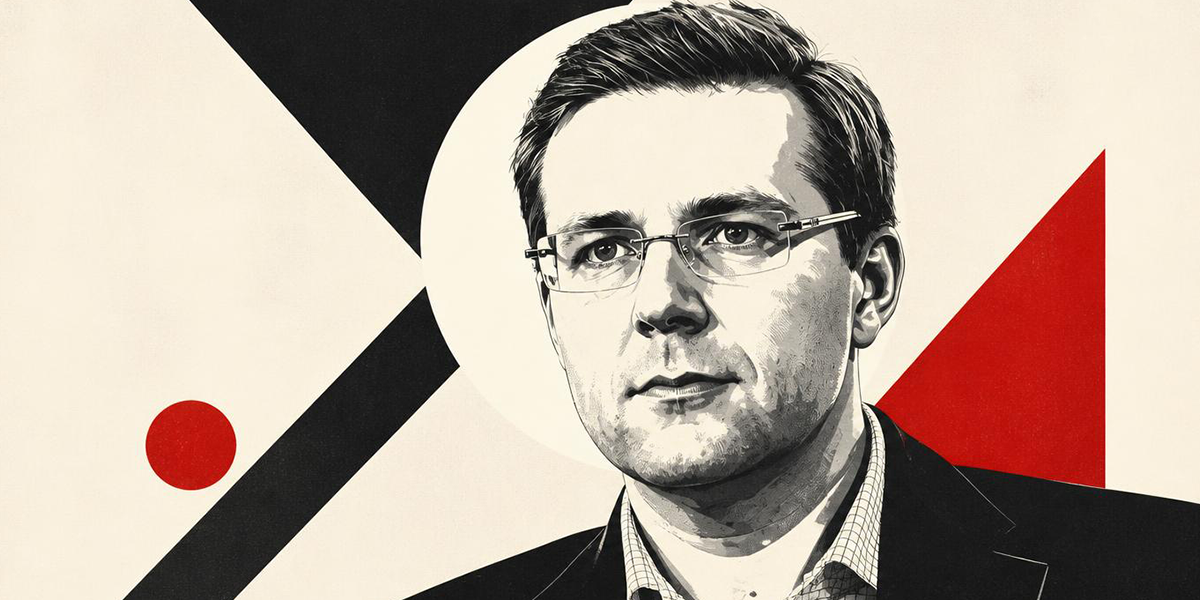
Parliamentary elections are held in Israel on October 27, and could cost Benjamin Netanyahu his grip on power. His main challenger is former IDF Chief of Staff Gadi Eisenkot. Two other former prime ministers, Naftali Bennett and Yair Lapid, are running on a joint ticket called Beyahad (“Together”). A change of leadership, however, does not necessarily mean a shift in the country’s military policy. What do Israelis, weary of war, expect from the elections? Who will be able to form a government, and how will its composition affect relations with Iran, the United States, and Russia? Political analyst Ilya Grashchenkov discusses these questions in an interview with “Za Rubejom”.
– What is the mood among Israelis as they approach the elections? What concerns them most at the moment?
– Israel is heading into the elections amid profound public fatigue, anxiety, and political polarization. In the three years since the events of October 7, 2023, the country has experienced large-scale military operations, a confrontation with Iran, severe economic shocks, and a crisis of confidence in state institutions.
At the same time, Israeli society cannot simply be described as tired of military action. A significant portion of the population continues to support a hard-line security policy. Yet people also want to know when the state of emergency will end and life will begin to return to normal.
That is why the campaign has centered on questions of accountability for the events of October 7, the effectiveness of the political leadership, whether ultra-Orthodox men should be required to serve in the military, the rising cost of living, and the future structure of the state.
This creates a kind of paradox. Most Israelis are not prepared to abandon a hard-line approach to external threats, but more and more of them doubt that the established political elite can provide them with a secure future.
– What is at stake in these elections beyond the question of who will become prime minister?
– I would describe these elections as a kind of referendum on the political system that has taken shape under Netanyahu. The issue is not simply who will become the next prime minister, but what kind of state Israel will be after the crisis it has endured.
The main contest is between Benjamin Netanyahu and former IDF Chief of Staff Gadi Eisenkot, who leads the Yashar party. But we should not forget former prime minister Naftali Bennett, who has joined forces with Yair Lapid on the Beyahad ticket, as well as Avigdor Lieberman and Yair Golan.
Interestingly, almost all of Netanyahu’s major challengers, with the exception of the left wing of the opposition, hold fairly hard-line views on national security. As a result, the familiar division between left and right is giving way, to a considerable extent, to a different confrontation: between those who want to preserve Netanyahu’s political system and those who believe it needs to be renewed.
– What are Netanyahu’s chances of staying in office? What helps him retain support, and what could cost him victory?
– It would be a big mistake to write Netanyahu off. He is one of modern Israel’s most experienced politicians and has repeatedly demonstrated an ability to emerge from situations that appeared hopeless.
His main advantages remain Likud’s loyal voter base, the support of religious and nationalist parties, his political experience, and his personal relationship with Donald Trump. The US president openly endorsed Netanyahu on October 18, making this a significant development in the final stage of the campaign.
His biggest problem, however, is the public’s accumulated fatigue with his rule. Some Israelis hold him responsible for failures in the security system, the prolonged military operations, and domestic political conflicts. The corruption charges against him, which Netanyahu himself denies, add to the pressure.
According to a Maariv poll published on October 23, the current governing coalition could win 48 seats, while the opposition could secure 54. A majority requires 61 seats. Other polls paint a somewhat different picture, but likewise indicate that no side is assured of a majority.
Netanyahu’s greatest threat, therefore, may not even be a Likud defeat at the hands of Eisenkot’s party, but his inability to form a government.
– What is Gadi Eisenkot offering voters, and why might they be willing to trust him?
– He is offering a change of leadership without a radical shift in national security policy.
He is a former IDF Chief of Staff with extensive military experience who was directly involved in decision-making after October 7.
He has also suffered a profound personal loss: his son and two nephews were killed in Gaza.
For Israeli society, this is an important factor in building trust. Eisenkot is seen not as a political insider working from the comfort of an office, but as someone who has shared his country’s fate and paid a heavy personal price.
His platform, however, is by no means pacifist. He advocates eliminating Hamas’s military capabilities, preventing Iran from acquiring nuclear weapons, and maintaining Israeli control over security matters. He also opposes Palestinian statehood.
The main difference between Eisenkot and Netanyahu lies in their approaches to governance. Eisenkot promises a more responsible, professional, and less confrontational system of government, an independent investigation into the events of October 7, and the restoration of public confidence in state institutions.
– If neither camp wins a majority, who could reach an agreement with whom? Is there a risk of another election?
– The likelihood of another parliamentary deadlock is quite high. Israel’s political system is structured in such a way that even winning an election does not guarantee a party leader the post of prime minister.
Several scenarios are possible. One is that Netanyahu could reach an agreement with his traditional allies and secure additional support. Alternatively, Eisenkot could form a broad coalition involving Bennett, Lapid, Lieberman, and other opposition forces.
But this presents a serious problem. Without bringing ultra-Orthodox or Arab parties on board, the opposition would find it extremely difficult to secure a majority. At the same time, potential members of a future government have fundamentally different positions on religion, military service, and cooperation with Arab politicians.
In theory, compromises with ultra-Orthodox parties, external support for a minority government, individual lawmakers switching sides, or even a national unity government are all possible. But each scenario would require painful concessions.
I therefore cannot rule out another election. Israel has already gone through a prolonged series of election campaigns in which political divisions proved stronger than the calculus of coalition-building.
– How strong are the radical right-wing parties? Could they gain even more influence?
– The radical right remains fairly strong. Moreover, its influence cannot be measured solely by the number of seats it holds in parliament.
Itamar Ben-Gvir’s Otzma Yehudit party is expected to win around seven to nine seats. Bezalel Smotrich’s religious-nationalist faction also retains substantial support.
The events of October 7 triggered a significant rightward shift in public opinion. Calls for the toughest possible action against Hamas, Iran, and Israel’s other adversaries have gained additional support, including among younger voters.
It is important, however, to distinguish between the growing popularity of radical politicians and their ability to determine actual government policy. If Netanyahu stays in power with the support of these parties, they will be able to demand further concessions on settlements, territorial control, and the use of force.
In that case, the radical right could emerge as the main political beneficiary of the elections, even without winning significantly more votes.
Conversely, if the opposition wins, the radical right’s influence over the executive branch could diminish. But public demand for hard-line solutions will not disappear.
– How is the confrontation with Iran affecting the elections?
– Iran has become one of the central issues of the campaign. Following the joint US-Israeli strikes in February 2026 and the subsequent regional escalation, relations with Tehran have taken on an entirely new significance for Israeli society.
Netanyahu is seeking to portray himself as the leader who managed to move from a policy of containment to direct confrontation with the Iranian threat. He emphasizes his experience and his ability to work with Washington.
But this strategy has a downside. The military operations have imposed significant economic costs, heightened public anxiety, and failed to resolve the Iranian issue once and for all.
Voters are therefore asking a perfectly reasonable question: if such a massive effort was required to ensure Israel’s security, why does the threat still remain?
It is also important to note that Eisenkot does not advocate a fundamentally different approach to Iran. He, too, believes Iran must be prevented from acquiring nuclear weapons and leaves open the possibility of using military force.
In my view, the difference is that Netanyahu relies on personal leadership in times of conflict, whereas Eisenkot favors a more institutional approach to security policy and greater coordination with allies.
A new escalation ahead of the vote could significantly alter voter sentiment, and not necessarily in the incumbent prime minister’s favor.
– If Netanyahu leaves office, what will change in domestic politics, Gaza, and relations with Iran?
– I would not expect a dramatic foreign policy shift. Israel has changed since October 7, and the forces behind those changes go far beyond Netanyahu himself.
Domestic policy could see more substantial changes. These might include restoring the independence of state institutions, revisiting judicial reform, establishing an independent commission to investigate the events of October 7, and adopting a new approach to military service for ultra-Orthodox men.
Changes concerning Gaza are likely to be more limited. Eisenkot also opposes Hamas remaining in power and calls for its disarmament. However, he may be more willing to pursue international agreements on the future governance of the Gaza Strip, and his government could be less dependent on radical politicians who advocate territorial expansion.
As for Iran, a fundamental strategic shift is unlikely. Any Israeli government will regard Iran’s nuclear and missile programs as major threats to national security.
Under Netanyahu, Israel will continue to rely on political mobilization and personalized leadership. Under Eisenkot, there may be an attempt to return to a more predictable, institution-based system of governance.
That does not mean an automatic shift toward a more peaceful foreign policy.
– What could the election results change in Israel’s relations with the United States and Russia?
– For the United States, what matters most is not the question of who is going to be the next prime minister, but Israel’s ability to remain a stable and predictable ally.
Trump has openly supported Netanyahu, and the two have a longstanding political relationship. The US president, however, is guided primarily by his own interests. If Israel’s government changes, Washington will begin building ties with the new leadership fairly quickly.
Moreover, an Eisenkot-led government could potentially be a more convenient partner for advancing US diplomatic initiatives in the Middle East, as it would be less dependent on the most radical political forces.
The situation with Russia is more complicated. Netanyahu maintained personal contacts with Vladimir Putin for a long time, but relations between Moscow and Tel Aviv have deteriorated noticeably in recent years because of Russia’s cooperation with Iran. Significantly, on October 18, Netanyahu himself publicly acknowledged serious conflicts of interest between the two countries.
For Moscow, maintaining channels of communication with Israel on Syria, Iran, and regional security is essential. This need will remain regardless of the composition of the Israeli government.
However, there is little reason to expect a victory of Eisenkot to automatically improve Russian-Israeli relations. Israel will remain a strategic ally of the United States, while Moscow will continue to develop its own relationship with Tehran.
Israelis are choosing between preserving the system built around Netanyahu and attempting to renew it. And that raises the central question: will a new political team be able to offer the country not just a different leader, but a way out of its prolonged state of crisis?
Interview by Alena Kazakova
Image credit: "Za Rubejom", Leonardo.ai
27.10.2026
news
An interview with Olga Veretennikova, Vice President of the Borsell analytical firm
06.11.2026 09:00:00
Since the Soviet era, hundreds of thousands of Africans have studied in Russia, including future presidents and prime ministers. The new Russian-African Youth Union aims to carry this tradition forward and take it to a new level.
05.11.2026 10:00:00

Other Interviews
An interview with Olga Veretennikova, Vice President of the Borsell analytical firm
An interview with Kim Ho-yeon, Korean writer and author of The Uncanny Convenience Store.
Interview with a member of the BRICS Literary Prize jury from the UAE, Dr. Maryam Alhashmi.
Interview with the President of the Ethiopian Writers' Association <b>Abere Adamu</b>.